
Osteoporosis
Read more about osteoporosis, how it develops, who is at risk, and why finding it early is essential for protecting bone health and preventing fractures.
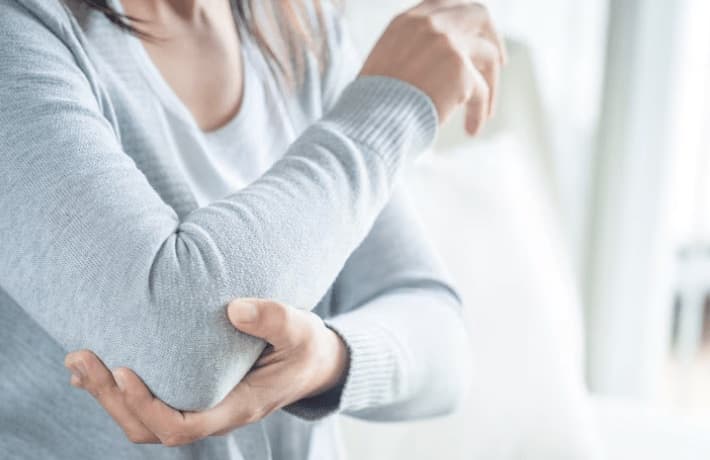
Osteoporosis
Osteoporosis is a disease that weakens the structure of the bones and significantly increases the risk of fractures. It is called a silent disease because it develops without symptoms for years, and most people only discover it when a fracture happens. About 700,000 Danes have the disease, but only a fraction are diagnosed and receiving treatment.
Risk factors and causes
Understanding the factors that affect bone strength can help you take action to protect your bone health and lower the risk of osteoporosis or future fractures.
Age and sex
Women lose bone mass faster than men, especially after menopause
Family history
Osteoporosis in the family raises your risk
Body build
A small, slim build means lower bone mass
Medical conditions
For example inflammatory bowel disease, kidney disease or thyroid disease
Medication
Long-term use of medicines such as corticosteroids or aromatase inhibitors
Lifestyle
Smoking, high alcohol intake, physical inactivity, poor diet
Symptoms and warning signs
Early osteoporosis does not necessarily cause symptoms. As the disease progresses, the following signs can appear:
Back pain
Caused by a fracture or compression of a vertebra.
Loss of height
Loss of height over time.
Stooped posture
A stooped, hunched posture (kyphosis).
Fractures
A fracture after minimal trauma: wrist, hip or spine.
Reduced grip strength
Reduced hand-grip strength, an early sign of lower bone density.
Brittle nails
Weak, brittle nails can be a sign of low bone density, although this is a less specific sign.
Checking whether treatment is working
A DXA scan tells you your current bone density, but it can only be repeated every 2–3 years. Bone markers give you a faster and more precise picture of what is happening in your skeleton right now, and whether your treatment is having the effect you want.
At OSAIA we use two key markers:
CTX (C-terminal telopeptide)
Measures how quickly bone tissue is broken down. Raised values indicate accelerated bone loss, and if they stay high despite treatment, the plan needs to be adjusted.
P1NP (Procollagen type 1 N-terminal propeptide)
Measures how actively the body is building new bone tissue. A rise in P1NP after treatment starts is a positive sign that the skeleton is responding.
Together, CTX and P1NP give us a complete picture of your bone turnover: not just a snapshot, but an ongoing update on whether your treatment is moving in the right direction.
How we use bone markers at OSAIA
At the start of treatment: a baseline measurement to understand your current level of bone turnover
After 3 and 6 months: an early check. Has CTX fallen? Has P1NP risen? If not, we adjust your treatment plan
Annual follow-up: systematic monitoring to make sure the effect is maintained over time
Bone markers are included in our OSAIA Pro subscription. They can also be ordered individually and taken anywhere in Denmark. The result is available in the OSAIA app within 3–5 working days of your blood test.
From a free pre-assessment to personal treatment
Getting started at OSAIA is simple. Here is the typical path from first contact to ongoing support for your bone health:
Free pre-assessment (max. 15 min)
A short conversation where we find out what you need, understand your situation and assess whether OSAIA is right for you. There is no obligation. We guide you to the next step.
First conversation with an adviser
Based on your needs, we match you with the most relevant healthcare professional. Together you review risk factors, symptoms and medical history, and agree which tests are relevant: a DXA scan, blood tests and/or bone markers (CTX and P1NP).
Personal treatment plan
You receive a written plan covering medication (if relevant), nutrition, exercise and lifestyle, tailored to your results and your situation.
Ongoing guidance through a subscription
For continuous support and monitoring you can choose one of our subscription plans (Basis from DKK 49 a month, Plus from DKK 149 a month or Pro from DKK 499 a month), with access to chat, check-ins, the calcium calculator and, with Pro, clinical follow-up with bone markers.
Frequently asked questions
Answers to the questions we hear most often about osteoporosis.
What is osteoporosis?
Osteoporosis is a condition in which bone mass falls, so the bones become fragile and break more easily. It typically develops without symptoms in the early stages, which is why finding it early is essential for protecting bone health and preventing fractures.
What are the early signs of osteoporosis?
Early osteoporosis does not necessarily cause symptoms. As the disease progresses, there can be back pain from a collapsed vertebra, loss of height, a stooped, hunched posture (kyphosis), fractures after minimal trauma in the wrist, hip or spine, and reduced hand-grip strength.
Who has the highest risk of osteoporosis?
Women lose bone mass faster than men, especially after menopause. Osteoporosis in the family, a small and slim build, conditions such as inflammatory bowel disease, kidney disease or thyroid disease, long-term use of corticosteroids, and smoking, alcohol and physical inactivity also raise the risk.
What are the bone markers CTX and P1NP?
Two markers measured in a blood test. CTX shows how quickly bone tissue is broken down, and raised values indicate accelerated bone loss. P1NP shows how actively the body is building new bone tissue, and a rise after treatment starts is a positive sign that the skeleton is responding.
How does OSAIA follow up on whether treatment is working?
We take a baseline measurement at the start of treatment to understand your level of bone turnover. After 3 and 6 months we check whether CTX has fallen and P1NP has risen, and we adjust the plan if not. After that we follow up once a year, so the effect is maintained over time.
Read on
Explore related topics and get a deeper understanding of your bone health.
Want to strengthen your bone health day to day?
With the OSAIA app you get expert knowledge, personal recommendations and tools, built to help you take the right steps for your bone health every day.
Read more about OSAIA AppReady to take charge of your bone health?
Knowledge is the first step. Action is the next. If what you have read here makes you think about your own bone health, a free pre-assessment at OSAIA is the natural next step. We are ready to help.
Book a free pre-assessment