
Early bone loss and prevention
Understand how bone loss develops, and take proactive steps to protect your bone health before a fracture happens.
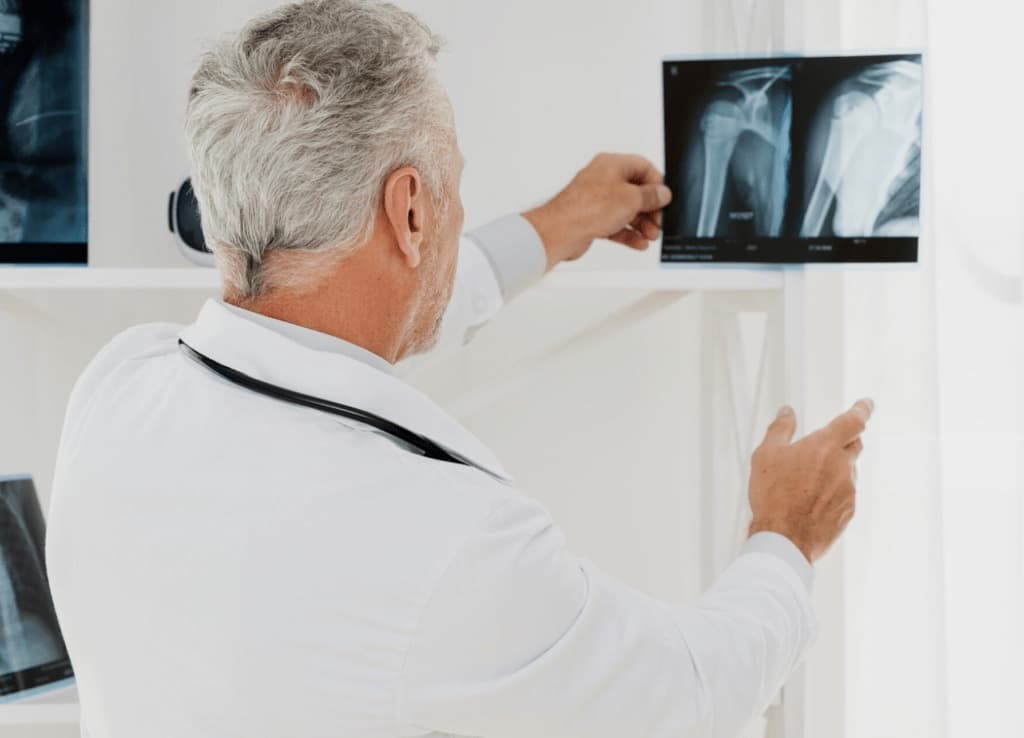
Why finding it early matters
Osteoporosis is called a silent disease, and with good reason. It develops without symptoms until a fracture shows that the bones have become fragile.
The good news is that we can act before it gets that far. Research shows that the right combination of medication, supplements, exercise and diet can actively prevent osteoporosis and strengthen the bones. At OSAIA we use DXA scans to detect the risk early and start the right treatment plan while we can still make a real difference.
Warning signs you should know
Acting early is the most effective protection against bone loss. These warning signs are your body's way of saying it is time to take your bone health seriously.
Sudden, severe back pain
Especially if it starts without an injury, or after a minor movement such as lifting something light or sneezing.
Fracture from minimal trauma
Breaking a bone in a fall from a low height (under 1 metre) or with minimal force.
Marked loss of height
Losing more than 3–4 cm in height can suggest compression of the vertebrae.
Stooped or hunched posture
A gradually increasing curve of the spine (kyphosis) over time.
Chronic back pain
Ongoing back pain that does not improve with rest or ordinary treatment.
Trouble standing upright
Increasing difficulty standing straight or maintaining good posture.
Should you be screened?
If you have one or more of these risk factors, we recommend a DXA scan. At OSAIA you can book directly. You do not need a referral from a doctor.
Age
Women aged 65+ or men aged 70+, or early menopause (under 45).
Family history
Parents or siblings with osteoporosis or a hip fracture
Body build
A slight, slim build or low weight (BMI under 19)
Medical conditions
Thyroid disease, rheumatoid arthritis, coeliac disease, kidney disease
Medication
Long-term use of medicines such as corticosteroids or aromatase inhibitors
Lifestyle
Smoking, high alcohol intake, physical inactivity or a poor diet
Previous fracture
A fracture from minimal trauma after the age of 40
Hormonal changes
Early menopause, low testosterone in men, or hormonal disorders
Screening recommendations
- All women aged 65 and older
- All men aged 70 and older
- Postmenopausal women under 65 with risk factors
- Men aged 50–69 with risk factors
- Anyone who has had a fracture after the age of 50
Want to test your risk of osteoporosis?
Take our risk test to see whether you may be at risk of osteoporosis.
OSAIA risk testTests, scans and risk assessment
How do we assess your bone health?
DXA scan (dual-energy X-ray absorptiometry)
The gold standard for measuring bone density. Quick, painless and with minimal radiation. It measures bone density in the hip and spine. Duration: 10–15 minutes.
OSAIA risk score (personal risk assessment)
A simple questionnaire that gives you a clear picture of your personal risk of bone loss and fracture, based on your individual risk factors. Duration: 5–10 minutes.
Blood tests (laboratory tests)
Checks vitamin D, calcium, thyroid function and bone markers (CTX and P1NP). Helps identify underlying causes and monitor treatment.
X-ray (skeletal radiography)
Can show fractures and severe bone degeneration, but it is not as sensitive as a DXA scan for early detection. It can be used when a fracture is suspected. Duration: 15–30 minutes.
Understand your T-score
Your DXA scan gives a T-score that compares your bone density with that of a healthy young adult.
- +1 to -1T-score
Normal bone density
Your bone density is within the normal range for a healthy young adult.
- -1 to -2.5T-score
Osteopenia
Your bone density is lower than normal, but not yet osteoporosis. Preventive steps are important.
- -2.5 or lowerT-score
Osteoporosis
You have osteoporosis and a higher risk of fractures. Treatment is recommended.
Diet and nutrition for stronger bones
Calcium and vitamin D are the foundation. OSAIA recommends:
1,000–1,200 mg of calcium daily
from dairy products, vegetables and almonds
Vitamin D: 800–1,000 IU daily
check your level every year
A protein-rich diet
supports bone formation and muscle mass
Limit alcohol and avoid smoking
both speed up bone loss
How OSAIA can help you
Whether you want to understand your risk, be screened or act now, OSAIA supports you at every step.
Consultation with an OSAIA specialist
Talk directly with one of our specialists for a personal assessment of your risk factors, bone health and recommended next steps.
DKK 999(Doctor/specialist)
DKK 699(Nurse/physiotherapist/dietitian)
- Review of your risk factors and medical history
- Guidance on whether a DXA scan or blood tests are recommended
- A personal prevention or treatment plan
- A prescription or referral if relevant (doctor consultation)
OSAIA Basis
Fast access to expert guidance and the tools you need, including the calcium calculator and articles on bone health.
MonthlyYearlyDKK 49/month
- Direct chat with healthcare professionals, with a reply within 1 working day
- Access to all bone health webinars (live and recorded)
- AI calcium calculator
- All member discounts with our partners (Pharma Nord, PureGym, SenseMyDiet and many more)
OSAIA Plus
Everything in Basis, plus calcium and vitamin D delivered to your door, so you always get enough nutrients for your bones.
MonthlyYearlyDKK 149/month
- Calcium and vitamin D delivered to your home every 3 months (Pharma Nord)
- A vitamin D home test twice a year
- Personal guidance on diet and supplements by chat
- Unlimited use of the calcium calculator
Want to strengthen your bone health day to day?
With the OSAIA app you get expert knowledge, personal recommendations and tools, built to help you take the right steps for your bone health every day.
Read more about OSAIA AppFrequently asked questions
Answers to the questions we hear most often about screening and early bone loss.
When should I be screened for osteoporosis?
We recommend a DXA scan if you are a woman over 65 or a man over 70, have had an early menopause (before the age of 45), have parents or siblings with osteoporosis or a hip fracture, have a low body weight, take corticosteroids, or have broken a bone from minimal trauma after the age of 40.
What is a DXA scan?
A DXA scan (dual-energy X-ray absorptiometry) is the gold standard for measuring bone density. It is quick, painless and uses minimal radiation, and it measures bone density in the hip and spine. The scan takes 10–15 minutes. At OSAIA you can book directly, without a referral from a doctor.
What does my T-score mean?
The T-score compares your bone density with that of a healthy young adult. Normal means within the normal range. Osteopenia means lower than normal, but not yet osteoporosis, and preventive steps are important. Osteoporosis means a higher risk of fractures, and treatment is recommended.
Which warning signs should I act on?
Sudden, severe back pain without an injury, or after a light movement. A fracture from a fall of less than 1 metre, or from minimal force. A loss of more than 3–4 cm in height, which can suggest compression of the vertebrae. A stooped posture, or trouble standing upright.
How much calcium and vitamin D is recommended?
OSAIA recommends 1,000–1,200 mg of calcium daily and 800–1,000 IU of vitamin D daily, together with a protein-rich diet, limited alcohol and stopping smoking. A blood test at OSAIA checks your vitamin D and calcium levels, and how your thyroid is working.
Keep learning
Explore related topics to deepen your knowledge of bone health.
Ready to take charge of your bone health?
Join the hundreds of other patients who have chosen OSAIA on the way to better bone health. Start by booking a free pre-assessment. There is no obligation and no waiting list.
Book a free pre-assessment